What Muslims Should Know About Alcohol in Cosmetics
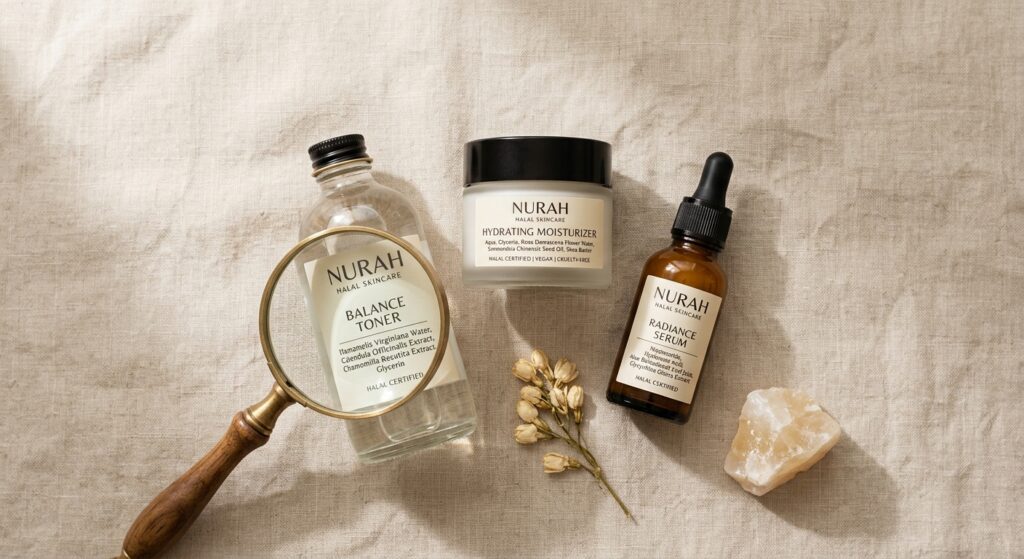
I get asked this question A LOT of times! Btw, the image is AI-generated so ignore the gibberish ingredients.
If you’ve ever stared at a skincare ingredient list and thought, “Okay… but is this halal?” — you’re definitely not alone.
Many skincare products contain ingredients like Alcohol Denat, Cetyl Alcohol, or Phenoxyethanol, and the word alcohol can understandably raise concerns for Muslim consumers. But here’s the thing: not all alcohols in skincare are the same. Some are used to help formulas feel light and dry quickly, while others are fatty alcohols that actually soften and stabilize products.
So, is alcohol in skincare halal? The short answer is: it depends on the type of alcohol, its source, and how it is used in the product.
In this guide, I’ll break that down in a simple, practical way so you can read labels with more confidence and make better choices for your skin and your beliefs.
What Does Alcohol Mean in Skincare and Cosmetics?
The word alcohol on a skincare label does not always mean the same thing.
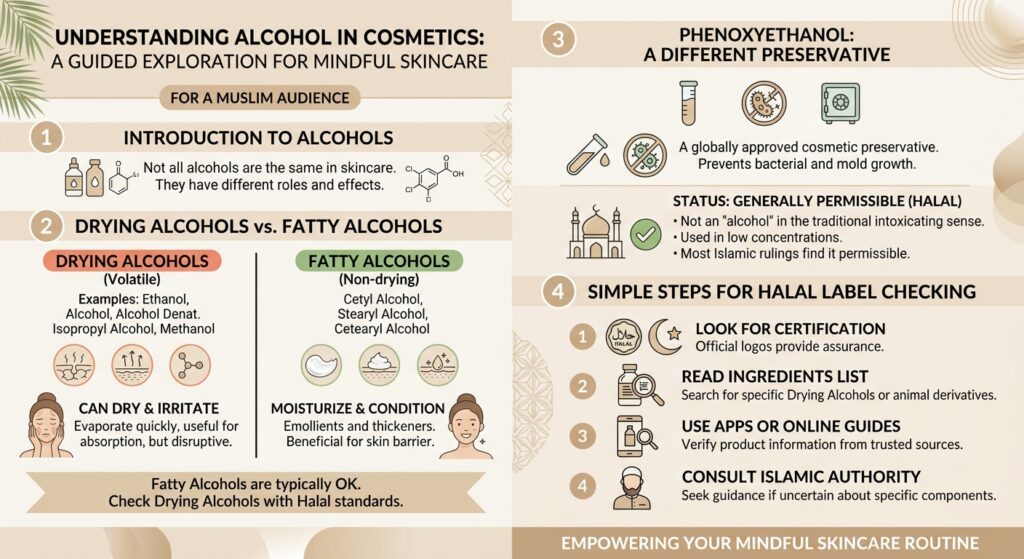
In cosmetics, alcohol ingredients usually fall into two broad groups:
- Drying alcohols: often used to help formulas dry quickly or feel lightweight
- Fatty alcohols: used to soften skin, thicken creams, and stabilize formulas
This distinction matters because the same word can describe ingredients with very different functions and very different effects on skin.
Two Kinds of Alcohol in Skincare
1. Drying alcohols
These are the alcohols people usually mean when they worry about skincare drying out the skin.
Examples:
- Alcohol Denat
- SD Alcohol
- Ethanol
What they do:
- evaporate quickly
- help products dry fast
- make formulas feel lighter
- can leave skin feeling tight or stripped
Who should be cautious:
- people with dry skin
- sensitive skin
- irritated or damaged skin barriers
Products containing drying alcohol:
- Astringent
- Setting spray
2. Fatty alcohols
These are a completely different story. I call these alcohol functional ingredients.
Examples:
- Cetyl alcohol
- Stearyl alcohol
- Cetearyl alcohol
What they do:
- soften skin
- improve texture
- thicken creams
- stabilize formulas
- help products feel smooth and creamy
These are generally used as emollients or texturizers, not as harsh drying agents. So if you see cetyl or cetearyl alcohol on a label, don’t panic. These are usually the friendlier kind of alcohol in skincare.
Products containing fatty alcohols:
- Body Butters
- Lotions
Is Alcohol in Skincare Halal or Haram?
This is where the conversation gets a little more nuanced.
From an Islamic perspective, the main concern is usually intoxicating alcohol, especially when it is used in a way that resembles drinkable alcohol or is clearly impermissible by the Halal standard.
But in skincare, the situation is more complex:
- Drying alcohols may be viewed differently depending on their source and use
- Fatty alcohols are generally treated differently because they are not intoxicating
- Some products may contain alcohol in very small amounts as part of a formulation rather than as a drinkable substance
Because of that, not every product with “alcohol” on the label is automatically haram. And not every alcohol-free product is automatically Halal either. Ingredient labels can be sneaky little gremlins!
If you want the safest route, look for:
- already Halal-certified products
- trusted brands or indie brands with clear ingredient sourcing
Is Phenoxyethanol Halal?
You may also see Phenoxyethanol in skincare and this one confuses a lot of people.
What Phenoxyethanol does
Phenoxyethanol is a preservative. It helps keep water-based products safe by preventing bacteria, yeast and mold growth.
You’ll often find it in:
- creams
- serums
- toners
- lotions
What it is not
Phenoxyethanol is not the same as drinking alcohol. It does not function like beverage alcohol and it does not intoxicate you. Furthermore the intention of adding this ingredient is to preserve the product… not to make our customers drunk!
Why it matters
Preservatives are important because skincare products with water can breed bacteria or become contaminated. In other words, preservatives are often there to protect the product and your skin. It also prolong the shelf-life of the product.
If you are very particular about this, simply use products that have other preservatives instead.
Does Alcohol in Skincare Affect Wudu or Prayer?
This is a common question, and different scholars may approach it differently.
A practical way to think about it:
- external skincare use is not the same as consuming alcohol
- cosmetic ingredients may be treated differently from drinkable alcohol
- if you prefer a stricter approach, choose products with clear Halal certification or ingredients you feel comfortable with
Because opinions can vary, many people rely on trusted religious guidance for certainty.
Personally, I’m ok with using cosmetic-grade alcohols in skincare. I use Phenoxyethanol in my DIY products. If the formula calls for Vodka, I usually substitute it. (If you’re wondering, sometimes formulators from the UK and America use Vodka to infuse herbs)
Signs a Product Is Not Right for Your Skin
Babe, no matter how Halal the product is, sometimes some ingredients just don’t suit you.
Stop using a product if you notice:
- stinging or burning
- redness
- tightness or flaking
- breakouts or bumps
- itchy patches or swelling
If the reaction is strong, stop using the product and wash it off. If it becomes worse, see a doctor immediately.
It happened to me once – i forgot what product and what brand, I went to the GP immediately. He gave me a shot in the butt and all the itch went away.
A gentle reminder
Expensive does not always mean better. A simple, gentle formula often works better than a fancy bottle that looks luxurious, priced like it’s made for a Queen but it does the same thing!
How You Can Check If a Skincare Product Is Halal
Here’s a simple checklist you can use when shopping:
- Read the ingredient list
- look for alcohol names and preservatives
- Identify the type of alcohol
- drying alcohol
- fatty alcohol
- Check for Halal certification
- this is the easiest shortcut when available
- Look at fragrance and other questionable ingredients
- helpful if you want both Halal-compliant and sensitive skin-friendly products
- When in doubt, ask a trusted source
- the manufacturer (if you have access to their email or social media)
- you can drop me an email and I can help check for you (but response will not be immediate)
TLDR: FAQs About Alcohol in Skincare
Is alcohol in skincare halal?
It depends on the type of alcohol, its source, and how it is used in the product.
Is alcohol in cosmetics Halal?
Some products containing alcohol may be considered permissible, while others may not be, depending on the ingredient and interpretation. If products contains vodka-infused herbs, it’s best to stay away. Honest formulators will list the INCI (ingredients list by its scientific name) as Organic Vodka or Vodka.
Is Cetyl Alcohol Halal?
Cetyl alcohol is a fatty alcohol and is generally treated differently from intoxicating alcohols.
Is Denatured Alcohol Halal?
This is more controversial because it is a drying alcohol often used for quick-dry or lightweight effects.
Is Phenoxyethanol halal?
Phenoxyethanol is a preservative, not beverage alcohol. People may still check it against their preferred halal standard.
Can Muslims use skincare with Alcohol?
Many Muslims do, especially when the alcohol is a non-intoxicating cosmetic ingredient. Others prefer to avoid it.
Is Alcohol-free skincare always halal?
No. A product can be alcohol-free and still contain other ingredients you may want to check. Even Vegan, Organic and Natural skincare products may not be Halal.
Final Thoughts
So, is alcohol in skincare halal? The honest answer is that it depends on the ingredients and your belief.
Not all alcohols are the same. Drying alcohols, fatty alcohols, and Phenoxyethanol all serve different purposes in skincare, and they are not all treated the same way in halal discussions.
If you want to make informed choices:
- learn the difference between alcohol types
- read ingredient lists carefully
- check for Halal certification when possible
- choose gentle, fragrance-free formulas if your skin is sensitive
A little label literacy goes a long way. And lastly, it saves time, money, and a whole lot of “why is my face suddenly angry?” moments.
Here’s a simple infographic to summarize today’s topic: Is Alcohol in Skincare Halal?