
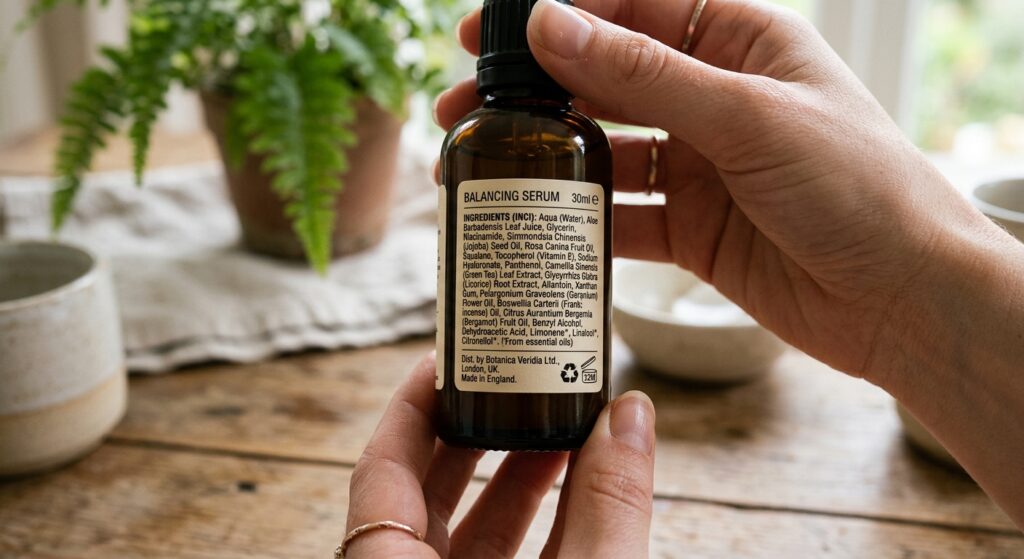
Let’s be honest — I used to not know how to read an INCI list. And you can guess how many times I flipped a skincare bottle over, seen a wall of words like “aqua, glycerin, cetearyl alcohol, tocopherol” and I just… put it back on the shelf!
Did you do that too? Well, after I’ve taken various skincare courses, I need to share how important INCI list is! Up until now I still Google the odd ingredient names! But here’s the thing: once you know how to read that list, you’ll never feel lost in the beauty aisle again. Let’s break it down together, shall we?
And here in Singapore, we’re lucky — we follow some of the strictest cosmetic regulations around! Our Health Sciences Authority (HSA) enforces the ASEAN Cosmetic Directive, which is modelled closely after EU cosmetic law. That means labelling every ingredient by its correct INCI name is 100% non-negotiable for any brand selling here, mine included.
So when you’re shopping local, you can trust that what’s printed on the label is what’s legally required to be there.
What Is an INCI List, Anyway?
INCI stands for International Nomenclature of Cosmetic Ingredients. It’s the standardized naming system every cosmetic brand — Halal-certified or not, drugstore or luxury — has to follow when listing what’s inside a product. Think of it as a universal language for skincare, so an ingredient in a serum made in Seoul is named the exact same way as one made here in Singapore.
That “aqua, glycerin, cetearyl alcohol” list on the back of your bottle? That’s your INCI list. It’s not marketing. It’s not a suggestion. It’s the actual, legally required breakdown of the formula, and once you can read it, you hold real power over what goes on (and into) your skin.
Why Bother Decoding It If Nobody Know How to Read An INCI List?
I get asked this a lot: “Yati, isn’t it enough to just trust what’s on the front label — ‘clean,’ ‘natural,’ ‘gentle’?” Honestly, NOPE it isn’t and here’s why:
Front-label claims aren’t regulated the same way INCI lists are. A product can say “natural” and still be 90% synthetic. The INCI list doesn’t lie.
Halal-conscious checking starts here. As a Muslim formulator, this is deeply personal to me — you can’t verify whether a product contains alcohol-based solvents, animal-derived ingredients like carmine or certain collagens, or unclear “fragrance” blends without reading the actual list.
Sensitivities and allergies hide in plain sight. Fragrance, certain preservatives, or specific plant extracts can trigger reactions, and they’re always named — just not always in language you recognize. You stop overpaying for repackaged basics. Many “miracle” products are 80% water and a dash of active ingredient dressed up in a fancy jar.
Reading the INCI list is one of the most quietly powerful things you can do as a consumer — and as a mama choosing products for your family.
Where Do You Even Find It?
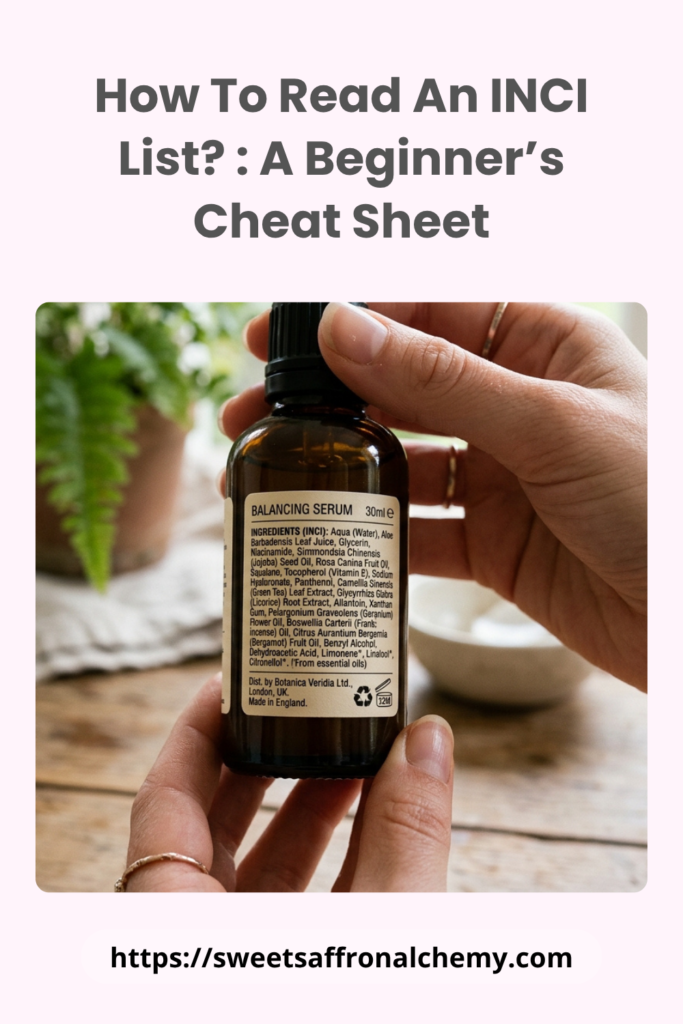
INCI lists are usually printed:
- On the back or bottom of the packaging, often in tiny font (bring your reading glasses, I won’t judge)
- On the product page of the brand’s website, usually under a tab labelled “Ingredients” or “Full Ingredient List”
- On ingredient-checking databases like INCIDecoder or the EU’s CosIng database, where you can search individual ingredient names if the packaging text is too small or blurry in a screenshot
If a brand refuses to publish its full ingredient list anywhere — that, mama, is a red flag in itself.
Which Ingredients Should You Actually Pay Attention To?
Here’s the golden rule:
INCI lists are ordered by concentration, from highest to lowest (once you pass the 1% concentration mark — after that, order can shuffle a bit since brands don’t have to be as precise).
So:
- The first 4–5 ingredients make up the bulk of the formula. This is where you’ll usually see your water, your main emollients, and your headline “hero” ingredient if the brand is honest about it.
- The middle section usually holds your actives, humectants, and functional ingredients — think niacinamide, hyaluronic acid, panthenol.
- The last few ingredients are typically your preservatives, fragrance, and colorants — used in tiny amounts, but often the ones responsible for sensitivities.
A quick cheat: if a brand’s “star ingredient” is sitting near the very bottom of a long list, it’s likely there for marketing more than performance.
How to Read An INCI List : A Deep Dive
This is the part that scares people the most, but I promise it gets easier. INCI List is just a group of scientific names of the ingredients the manufacturers use to make the product.
Here’s my mom-friendly cheat sheet for common INCI-to-plain-English translations:
INCI
Ingredient
Aqua / Water
Water — the most common base ingredient
Glycerin
A humectant that draws moisture onto skin
Sodium Hyaluronate
Water-soluble form of hyaluronic acid
Cetearyl Alcohol
A fatty alcohol used to thicken and stabilize
Alcohol Denat.
Denatured alcohol — can be drying if used in high concentrations
Tocopherol
Vitamin E, often used as an antioxidant/preservative
Niacinamide
Vitamin B3, a brightening and barrier-supporting active
Parfum / Fragrance
A blend of scent ingredients — can be a single umbrella term for dozens of components
Sodium Benzoate /
Potassium Sorbate
Common, gentle preservatives
Carmine / CI 75470
A red colorant derived from crushed cochineal insects
Argania Spinosa Kernel Oil
Argan oil
Butyrospermum Parkii Butter
Shea butter
A few habits that will make this second nature:
- Search, don’t panic. A scary-looking scientific name doesn’t automatically mean a scary ingredient. Sodium ascorbyl phosphate sounds intense — it’s just a stable form of Vitamin C!
- Latin names are your friend, not your enemy. Plant-derived ingredients are always listed by their botanical Latin name first (e.g. Rosa damascena), followed by the part used.
- Bookmark one trusted ingredient database and get into the habit of checking anything unfamiliar before you buy.
- Build your own “watch list.” Over time, you’ll naturally memorize the handful of ingredients that matter most to you — whether that’s for halal compliance, sensitivity, or personal preference.
The Takeaway
Decoding an INCI list isn’t about becoming a cosmetic chemist overnight — it’s about shopping with awareness. The more familiar you get with these names, the faster you’ll be able to glance at a bottle and know, within seconds, whether it deserves a spot in your routine.
Ready to go deeper?
I’ll be breaking down specific ingredient categories — like hidden animal-derived ingredients and halal red flags — in upcoming posts, so you always know exactly what you’re bringing home to your family.
Let’s test your knowledge!
Try and see if you know how to read an INCI List now:
- Ricinus Communis Seed Oil
- Rubus Idaeus Fruit Extract
- Copernicia Cerifera Wax
- Euphorbia Cerifera Wax
Don’t worry, you can Google it up if you’re not sure!

