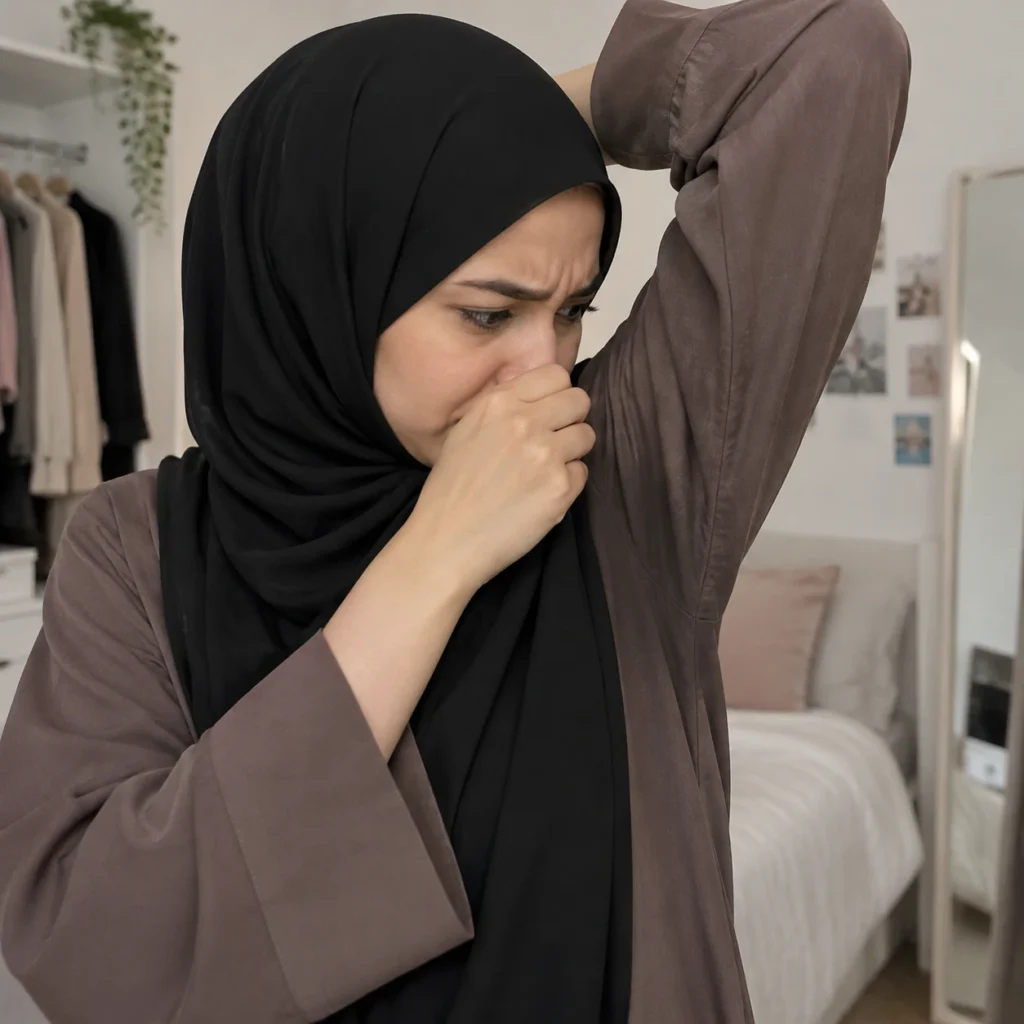
Let’s talk about something we all deal with but rarely discuss openly: body odour. Whether you have noticed it after a long commute on the MRT or after a hectic day running around with the kids, body odour is a completely normal part of being human.
It does not mean you are unclean. It simply means your body is doing what bodies do.
The good news? Body odour is very manageable once you understand what causes it. In this post, I will walk you through the science in a friendly way.
We will look at why body odour happens, what you can do about it, how deodorants and anti-perspirants differ, who should use which and when heavy sweating needs a doctor’s attention. Grab a cuppa and let’s get into it babe!
What Exactly Is Body Odour?
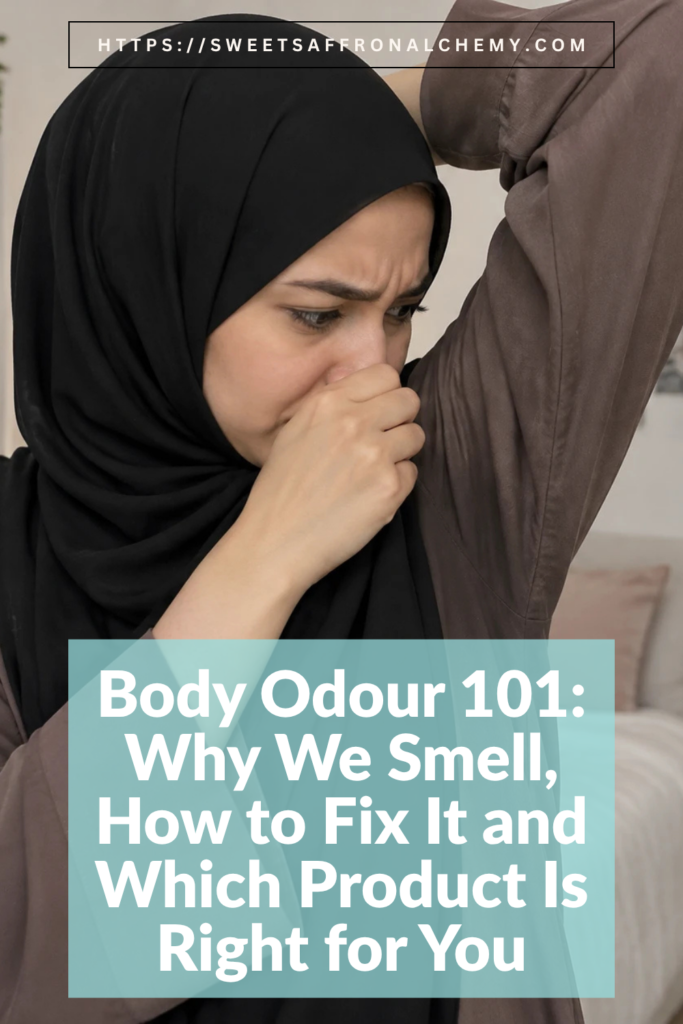
Body odour is the unpleasant smell that develops when sweat on your skin is broken down by bacteria. Here is the part that surprises many people: fresh sweat itself is almost odourless.
It is mostly water with a little salt. The smell only appears once the bacteria living on your skin start feeding on certain compounds in your sweat.
So when we talk about body odour, we are really talking about a partnership between sweat and skin bacteria. Remove or reduce either side and the smell drops dramatically.
Why Do We Have Body Odour?
Understanding the cause is the first step to fixing it. There are several reasons why body odour develops.
- 2 Types of Sweat Glands
You have 2 main types of sweat glands. Eccrine glands cover most of your body (there are 2 to 4 million of them) and produce watery sweat to cool you down. Apocrine glands are found in the underarms and the groin area. They produce a thicker sweat rich in proteins and fats. These are the compounds bacteria love most, which is why body odour is strongest in those areas.
- Bacteria and Their By-Products
When skin bacteria digest apocrine sweat, they release smelly molecules such as Propionic Acid and Isovaleric Acid. These are the real culprits behind that sharp, sour or cheesy whiff. Warm and humid places such as the underarms are perfect breeding grounds, and Singapore’s weather certainly does not help!
- Puberty and Hormones
Apocrine glands become active during puberty. This is why children rarely have body odour but teenagers suddenly do. Hormonal shifts during pregnancy, menstruation and menopause can also change how strongly you smell.
- Diet and Lifestyle
What goes in can come out through your pores. Garlic, onions, strong spices, red meat and alcohol can all intensify body odour. Smoking and stress play a role too. Stress sweat comes mainly from apocrine glands, so it tends to smell stronger than the sweat you produce when you exercise.
I remember drinking Fenugreek Tea during my confinement and I smelled like curry lol!
- Clothing Choices
Synthetic fabrics such as polyester trap moisture against your skin and let bacteria multiply. Natural fibres such as cotton and linen allow your skin to breathe, which helps keep body odour in check.
- Genetics
Did you know that your genes influence your body odour? A gene called ABCC11 affects how much odour-producing material your underarm sweat contains. Many people of East Asian descent carry a variant that results in very little underarm odour. If you or your family members rarely smell, genetics may be on your side!
- Medical Conditions and Medications
Sometimes a sudden change in body odour is a clue that something else is happening. Diabetes, thyroid problems, and liver or kidney conditions can alter how you smell. Certain medications can also change your sweat. If your body odour changes suddenly without an obvious reason, it is worth a chat with your doctor.
How to Overcome Body Odour: Friendly Tips That Work
Now for the fun part. Here is what you can do to keep body odour under control.
- Wash daily with a gentle cleanser. Shower regularly everyday. Pay extra attention to your underarms, groin and feet. A mild antibacterial or pH-balanced cleanser reduces the bacteria that cause body odour without stripping your skin.
- Dry thoroughly. Bacteria thrive on damp skin. Pat your underarms completely dry before dressing or applying any product.
- Wear breathable fabrics. Choose cotton or linen on hot days and change out of sweaty clothes quickly. Wash gym wear after every use because bacteria cling to fabric long after the sweat has dried.
- Keep your underarms clean. Hair holds on to sweat and bacteria. You do not have to remove it, but trimming or shaving can make body odour easier to manage.
- Rotate your footwear. Feet have more than 250,000 sweat glands. Let your shoes air out for 24 hours between wears to avoid smelly feet.
- Adjust your diet if needed. If you notice that certain foods make your body odour worse, try eating foods that are less oily. Drinking plenty of water also helps dilute sweat.
- Use the right product. A good deodorant or anti-perspirant is your best daily defence against body odour. We will cover the differences below.
- Check your ingredients. If you follow a Halal-conscious lifestyle like many of us do, look at the label. Some deodorants contain Alcohol (Ethanol) as a solvent. Alcohol-free options using ingredients such as Zinc Ricinoleate, Magnesium Hydroxide or Sodium Bicarbonate are widely available. Look for Halal-certified products where you can.
Deodorant vs Anti-Perspirant: What Is the Difference?
This is the question I get asked most often! These 2 products look similar on the shelf but they work in completely different ways.
Deodorant
A deodorant targets the smell rather than the sweat. It works by making your skin less friendly to bacteria (often using antimicrobial ingredients or Alcohol) or by masking odour with fragrance. Some modern formulas use Zinc Ricinoleate to trap odour molecules or Sodium Bicarbonate to neutralize them. Your body still sweats normally.
Anti-Perspirant
An anti-perspirant targets the sweat itself. Its active ingredients are Aluminium salts such as Aluminium Chlorohydrate or Aluminium Zirconium Tetrachlorohydrex Gly. These dissolve in sweat on the skin’s surface and form a temporary plug inside the sweat duct, which reduces the amount of sweat that reaches the surface. Less sweat means less food for bacteria and therefore less body odour.
You will see that most anti-perspirants also contain a deodorising component. This means they tackle sweat and smell together.
A quick safety note: you may have read online claims about Aluminium in anti-perspirants. Major health bodies have not found convincing evidence linking them to cancer. That said, if you prefer to avoid Aluminium, there are plenty of Aluminium-free deodorants that handle body odour well.
Who Should Use Which Product?
Not sure which product belongs in your bag? Here is a simple guide.
Choose a deodorant if:
- You sweat lightly or moderately and mainly worry about body odour
- You have sensitive skin that reacts to Aluminium salts or strong fragrances
- You prefer a more natural or Aluminium-free routine
- You are a teenager just starting to notice body odour
Choose an anti-perspirant if:
- You sweat a lot and want to keep your clothes dry
- You get visible sweat patches or yellow stains on your shirts
- You work in a hot environment or are on your feet all day
- You find that a deodorant alone does not control your body odour
Choose a combination product if:
You want dryness and freshness in 1 step. Most roll-ons and sprays labelled “anti-perspirant deodorant” do both jobs.
If you are unsure, start with a gentle deodorant. If you still struggle with body odour or damp clothing by midday, move up to an anti-perspirant. Always patch test a new product on a small area of skin first.
Spray Deodorant
Spray deodorant is a great choice if you want a light and quick-drying way to control body odour without any sticky or tacky feeling. Because the product never touches your skin directly, it is also a hygienic option for sharing a bathroom with the family or for freshening up on the go.
It suits you if you dislike the feel of a roll-on or a stick, or if you want to cover larger areas such as the feet and back.
Most sprays are deodorants only, so they tackle body odour rather than sweat unless the label says “anti-perspirant”. Many sprays use Alcohol (Ethanol) as a solvent and Butane or Propane as propellants, so check the label if you prefer Alcohol-free or Halal-certified products.
Hold the can about 15 cm away from your skin and avoid spraying on freshly shaved or broken skin to prevent stinging. Do not inhale it either. Spray in a well-ventilated space.
Why Do Some People Sweat Profusely?
Everyone sweats differently. But if you sweat far more than your body needs for cooling (soaking through clothes or dripping from your palms for no clear reason) you may have a condition called Hyperhidrosis.
Primary Hyperhidrosis
This is the most common type. It usually starts in childhood or the teenage years and affects specific areas such as the underarms, palms, soles of the feet or face. The nerves that signal the sweat glands are overactive even when you are not hot or stressed. It often runs in families and is not caused by any other illness.
Secondary Hyperhidrosis
This type is triggered by something else. Possible causes include an overactive thyroid, diabetes, menopause, infections, anxiety disorders or certain medications. It often affects the whole body and may include night sweats.
Heavy sweating can make body odour worse because there is simply more moisture for bacteria to work with. It can also affect confidence and daily life, so please do not suffer in silence.
How to Get Help
You should see a doctor if:
- Sweating interferes with your work or social life
- You experience night sweats without a clear reason
- Your sweating started suddenly in adulthood
- You also have symptoms such as weight loss, fever or chest pain
- Over-the-counter products are not working
A GP or a dermatologist can assess whether your sweating is primary or secondary and suggest treatment. There is no shame in asking for help. Hyperhidrosis is a medical condition and effective treatments exist.
Why You Should Not Sleep With Deodorant or Anti-Perspirant On
I know it is tempting to skip the evening routine when you are tired. But it is best not to sleep with deodorant or anti-perspirant on. Here is why.
- Your skin needs to rest. Overnight your skin repairs itself. Leaving products on for 8 hours or more can clog pores and trap sweat and bacteria under a layer of product. This may lead to irritation, itchiness or small bumps.
- Product build-up causes problems. Layers of residue can lead to dull or darkened underarms. Anti-perspirant salts left on the skin for long periods may also irritate sensitive skin.
- Fragrance and Alcohol can irritate. Many deodorants contain Fragrance or Alcohol. These ingredients can dry out the delicate underarm area when they sit on it all night.
- It can stain your bedding. Residue transfers onto pillowcases and sheets. Over time it leaves stiff yellow marks that are difficult to remove.
A better evening routine: wash your underarms with a gentle cleanser before bed, pat them dry and let your skin breathe. Reapply your product in the morning after your shower when skin is clean and completely dry.
An exception: if your doctor has prescribed a clinical-strength anti-perspirant for hyperhidrosis, they may tell you to apply it at night on dry skin and wash it off in the morning. In that case follow your doctor’s instructions exactly.
Final Thoughts
Body odour is natural and nothing to be embarrassed about. It happens when sweat meets bacteria and a mix of hormones, genes, diet, clothing and climate decides how strong it gets. With a little knowledge and a consistent routine you can stay fresh and confident all day long.
To recap: wash daily and dry well. Wear breathable fabrics. Choose a deodorant if you need odour control or an anti-perspirant if you need sweat control. Do not sleep with either on. See a doctor if you sweat excessively or notice sudden changes in your body odour.
Your body is wonderful and it deserves care that feels good. Take it 1 step at a time and be kind to yourself.
Stay radiant, Yati Aura. Beauty. Chemistry.
** I am currently formulating underarms products and I hope it will be ready by January 2027. It includes a foam cleanser, clay cleanser, underarm mask and a roll-on deodorant.