

Bar Soap vs Body Wash: Which One Is Actually Better?
If you’ve stood in the shower aisle at Watsons or Guardian scrolling through 50 different bottles wondering whether you should just go back to a good old bar of soap, you’re not alone.
The bar soap vs body wash question comes up constantly in my DMs, and honestly, it’s one of those debates that sounds simple until you actually start reading ingredient labels. As a certified cosmetic formulator who’s been making skincare since 2017, I want to walk you through this properly — the what, the why, the when, the where, the who, and the how — so you can make a choice that actually fits your skin, your family, and your values.
What Is the Bar Soap vs Body Wash Debate, Really?
At its core, bar soap vs body wash comes down to chemistry. Traditional bar soap is made through saponification — oils or fats reacting with an alkali to form soap molecules — which means it’s naturally higher in pH (usually around 9–10) compared to your skin’s natural pH of around 4.5–5.5.
Body wash, on the other hand, is a surfactant-based liquid cleanser, usually formulated closer to skin-neutral pH, using ingredients like Sodium Laureth Sulfate, Cocamidopropyl Betaine, or gentler alternatives like Decyl Glucoside. Both remove dirt, sweat, and oil, but they do it through very different mechanisms, and that difference matters more than most people realize.
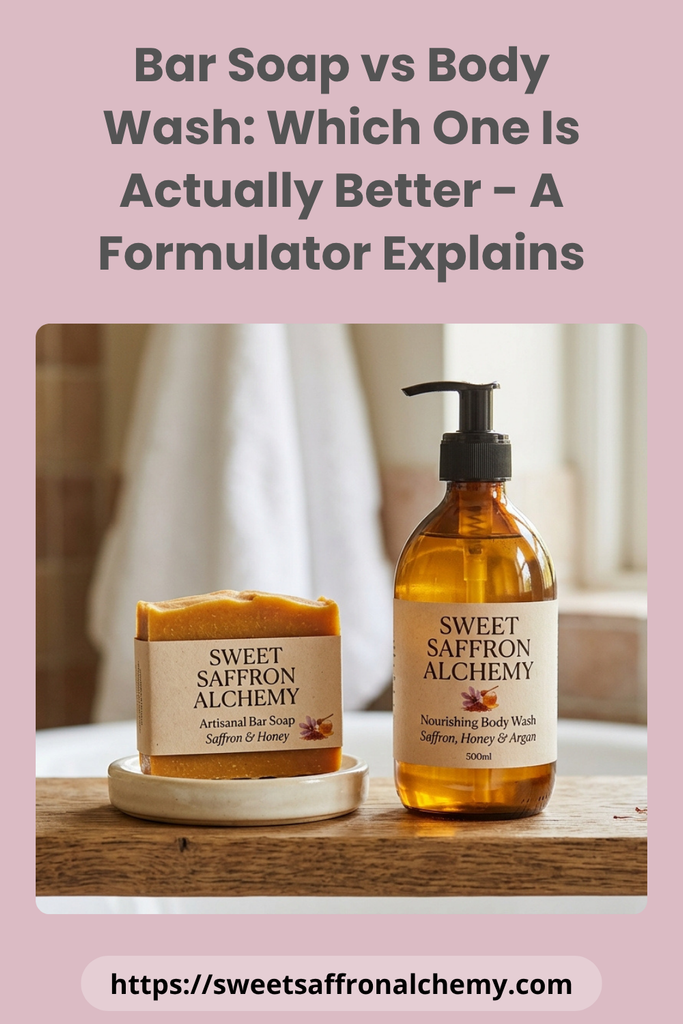
Why the Bar Soap vs Body Wash Question Actually Matters
This isn’t just a texture preference. The bar soap vs body wash choice affects your skin barrier, your wallet, the environment, and — for us Halal-conscious moms — what’s actually going into the formula.
Many traditional bar soaps historically used tallow (rendered animal fat) as the base oil, which raises an immediate Halal red flag unless it’s clearly labelled vegetable-based or certified.
Body washes aren’t automatically “safer” either — some contain alcohol denat or animal-derived glycerin sourced from non-Halal processes. So the real reason this debate matters isn’t bar vs bottle, it’s what’s actually inside that bar or that bottle, and whether it aligns with how you want to care for your family.
When Should You Choose Bar Soap Over Body Wash (or the Other Way Around)?
Timing and context matter a lot here. Bar soap tends to work better in Singapore’s humid climate for oily or acne-prone skin types, because its higher pH can help cut through excess sebum especially on the back and chest where body acne loves to show up.
Body wash tends to be the better call when your skin is dry, sensitized, or reactive — think post-pregnancy skin, eczema-prone kids or menopausal skin that’s lost some of its natural oils.
If you’re travelling, a bar is more airport-friendly (no liquid restrictions to worry about). If you’re dealing with sensitive skin during a flare-up, a fragrance-free body wash is usually gentler. The bar soap vs body wash decision, in other words, should shift with your skin’s season, not stay fixed forever.
So, yes you can switch from one to the other at any point of time depending on what your skin condition needs.
Where the Bar Soap vs Body Wash Question Actually Comes Up
You’ll notice this debate surfacing in a few very specific places — the shared family bathroom where everyone from toddlers to grandparents uses the same shower shelf, the gym bag where hygiene and convenience matter and increasingly in Halal beauty communities online where moms are asking whether their current soap or wash is even compliant.
It also comes up a lot in sustainability conversations, since bar soap generally uses less plastic packaging than a bottle of body wash, which matters if you’re trying to reduce household waste without sacrificing cleanliness.
For others, questions like it is natural, organic or vegan.
Which Is Better — Bar Soap or Body Wash — for Your Skin Type?
Here’s a quick breakdown I give my own readers when they ask me directly:
| Skin Concern | Better Choice | Why |
| Oily / acne-prone | Bar soap | Higher pH helps cut sebum |
| Dry / eczema-prone | Body wash | Lower pH, more emollients |
| Sensitive / Reactive | Fragrance-free body wash | Fewer irritant risks |
| Kids | Mild bar or body wash | Gentle, tear-free formulas |
| Travel / Minimalist | Bar soap | No liquid restrictions, less packaging |
There’s no single winner in the bar soap vs body wash comparison — it genuinely depends on what your skin is asking for right now, this season, not what worked for you 5 years ago.
Who Should Reach for Bar Soap, and Who Should Reach for Body Wash?
If you have naturally oily skin, live an active lifestyle, or are drawn to minimal, low-waste routines, bar soap is likely your better long-term match — just make sure it’s clearly labelled vegetable-oil based or Halal-certified and not mysteriously resourced tallow-based.
If you have dry, mature, or sensitive skin, are managing a skin condition, or are cleansing a baby or young child – a gentle, fragrance-free body wash is usually the safer pick.
And if you’re somewhere in between — combination skin, hormonal, Singapore’s humidity doing its thing — many moms I know actually rotate between both depending on the situation. There’s no rule saying you have to pick one side of the bar soap vs body wash debate forever!
How to Choose Between Bar Soap and Body Wash (and Why DIY Formulas Win)
Here’s the part I really want you to sit with. When you’re comparing bar soap vs body wash on a store shelf, you’re choosing between whatever ingredients that brand decided to put in and often that means fillers, synthetic fragrance, questionable preservatives or animal-derived ingredients that aren’t clearly disclosed.
This is exactly why I keep coming back to DIY formulas being the better option: when you make your own bar soap or body wash at home, you have full freedom to choose your own ingredients.
You decide the oils, you decide the surfactants, you decide whether it’s fragrance-free or scented with something Halal-verified and you know with certainty that nothing questionable has slipped into your formula. That control is something no store-bought bar or bottle, however well-marketed, can offer you.
If DIY feels intimidating, start small — a simple cold-process soap using Coconut, Olive and Castor oil is a beginner-friendly entry point, and a basic body wash base using Decyl Glucoside and Coco Betaine is gentle enough for most skin types. You don’t need a full lab setup to start. You need RO water, surfactants and other functional ingredients you actually trust.
Final Thoughts on Bar Soap vs Body Wash
At the end of the day, the bar soap vs body wash decision isn’t about which one wins universally — it’s about knowing your skin, knowing your values and knowing what’s actually in the formula you’re using every single day.
Whether you land on bar, bottle, or eventually your own DIY blend, the goal is the same: clean skin, a clear conscience, and ingredients you don’t have to second-guess.
If you want more breakdowns like this: Halal-conscious, formulator-approved, no fluff, pop your email in below and I’ll send the good stuff straight to your inbox.
Subscribe to the Sweet Saffron Alchemy newsletter →

